Sound familiar?Markland Woods
- The call
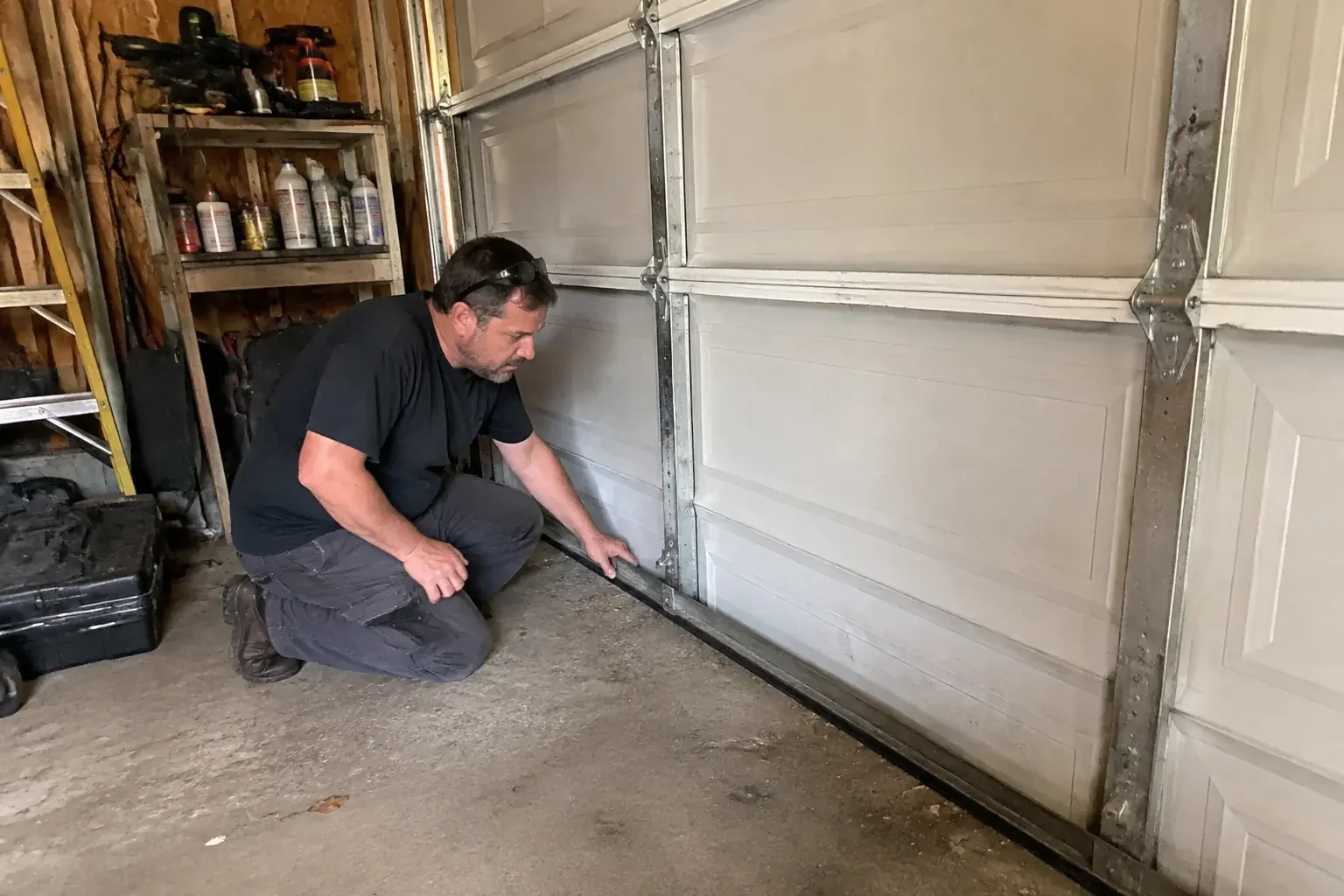
- There was a sharp crack from the garage, and when you went to look the door had dropped on one side and jammed. A length of cable lies coiled on the floor by the bottom roller.
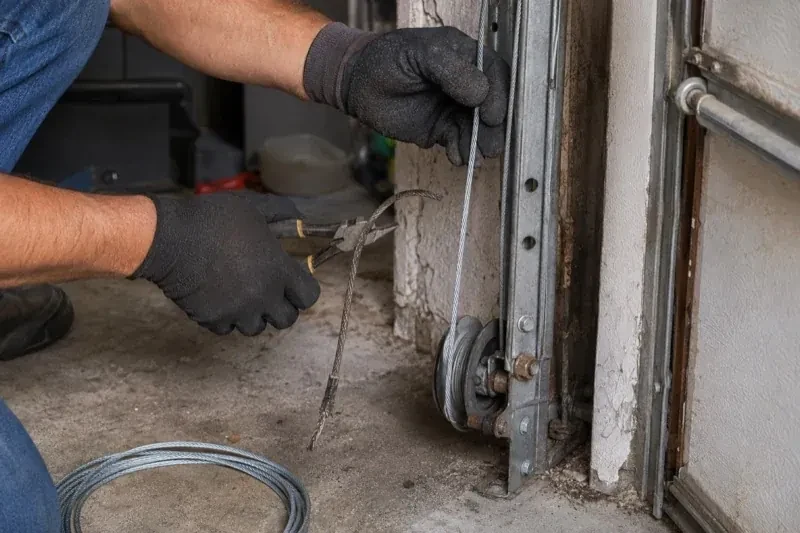
Cables are replaced as a pair, and there is a practical reason. Both went on the door together, have made the same number of trips and have sat in the same slush, so when one fails the other is close behind. A new cable beside a stretched one also pulls the door slightly out of level. Fitting two matched cables of the same length and construction lets the technician set the door dead level, tension both sides equally and leave a counterbalance that shares the work evenly for years. It also means one visit rather than two.
Sound familiar?Markland Woods
Garage Door Cable Replacement · Markland Woods
Scene 1
On a torsion door the cable drum is where most trouble starts or shows. The technician checks that each drum is tight on the shaft and that its set screws have not loosened and let it creep, which shortens the effective cable on that side. The groove is inspected for wear ridges, cracks and burrs that would chew through a new cable, and the slot that holds the cable stop is checked for damage. Where the old cable jumped its groove, the drum is examined for the mark it left and for whether the drum or an obstruction under the door was the cause. A worn drum is replaced with its mate.
Scene 2
With the springs wound and the clamps off, the technician lifts the door by hand. It should rise with light effort, hold still at roughly waist height, and settle to the floor without slamming; that is the balance test, and the spring turns are adjusted until it passes. The door is run through several full cycles by hand while the cables are watched on the drums. Then the opener is reconnected, its travel limits and force settings are checked against the newly balanced door, and the reversing test with a block under the door and the photo-eye test are carried out. You see each of these done.
Scene 3
Before leaving, the technician tells you what went on the door: the cable length and diameter, whether the drums or bottom brackets were renewed, the type of lift hardware, and how many turns the springs carry. It is worth writing this inside the cover of the door manual or on a card taped near the opener, because the next technician, or the same one years from now, can then match parts without measuring everything from scratch. If the springs were left in place, their age and wire size go on the same note so the timing of their eventual replacement is easy to plan.
What shapes the quoteApplewood Hills Garage Door Co.
FeesSame any hour
Leave it. With one cable slack the door is being carried on one side only, so it is unbalanced and may bind or drop unevenly when moved. The technician arrives with clamps and a method for taking the door's weight before anything is moved, and that is the moment to lift it. Until then a stationary door is exactly what you want.
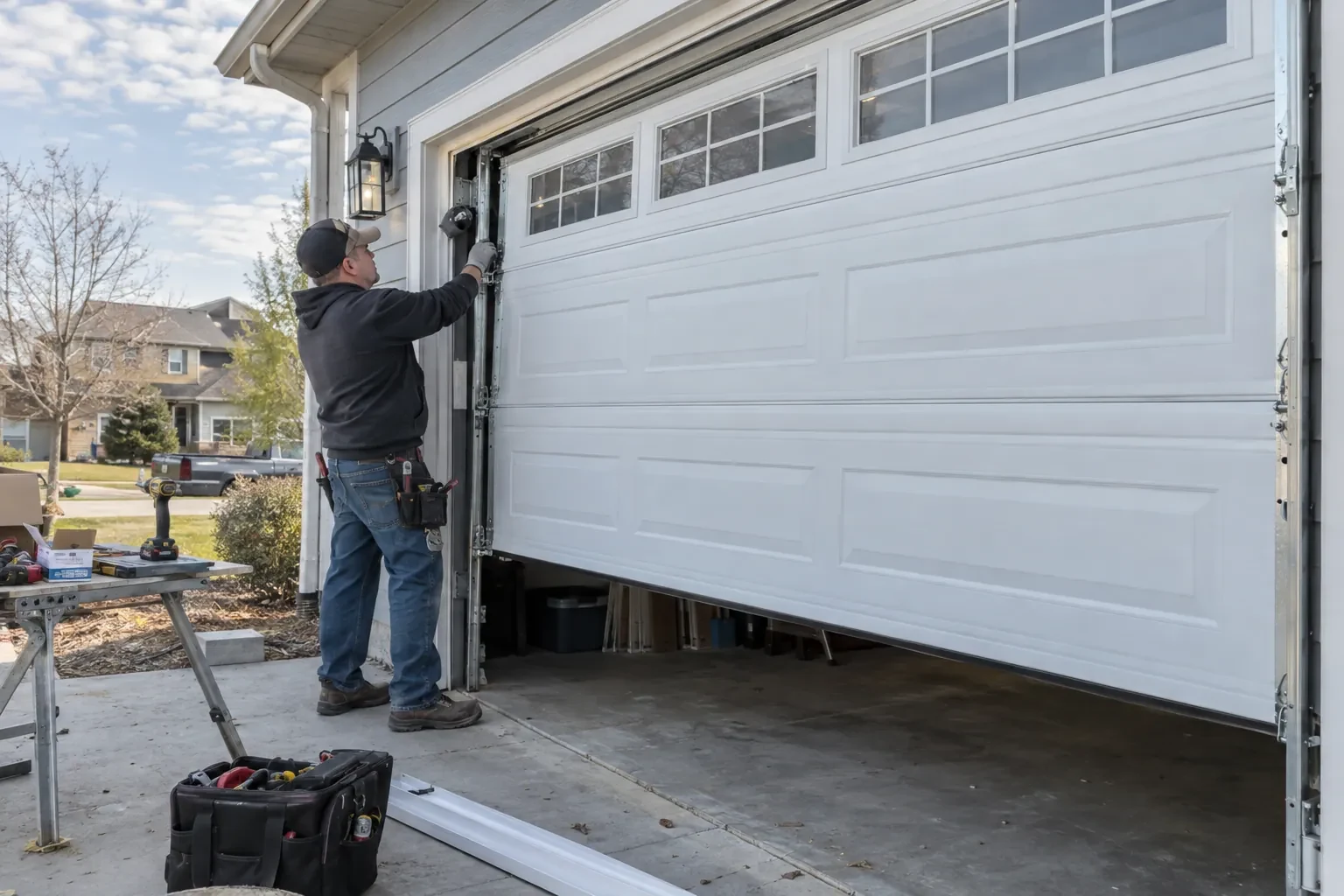
The opener is disconnected and the door clamped. The technician identifies the counterbalance type, inspects both cables, the drums, brackets, rollers, track and springs, and explains what is found. The springs are unloaded, the old cables removed, new ones fitted and set so the door is level, and the springs wound back. The door is then balanced by hand, the opener reconnected and its safety features tested while you watch.
They are galvanized aircraft-type wire rope: many fine steel wires twisted into strands, and the strands laid around a core, which gives a cable that bends around a small drum thousands of times without fatiguing. One end carries a swaged stop or a loop for the drum, the other a loop that fits over the bottom bracket pin. Diameter and length are chosen for the door's weight and height.
PeelOntario
Garage Door Cable Replacement · Mississauga, Applewood Hills, Orchard Heights, Applewood Heights
Every square is one home in a hundred.
On-site assessment
The car bumper kissed the door on the way in.
(289) 805-3301, open 24/7.
On-site assessment preferred · (289) 805-3301, open 24/7