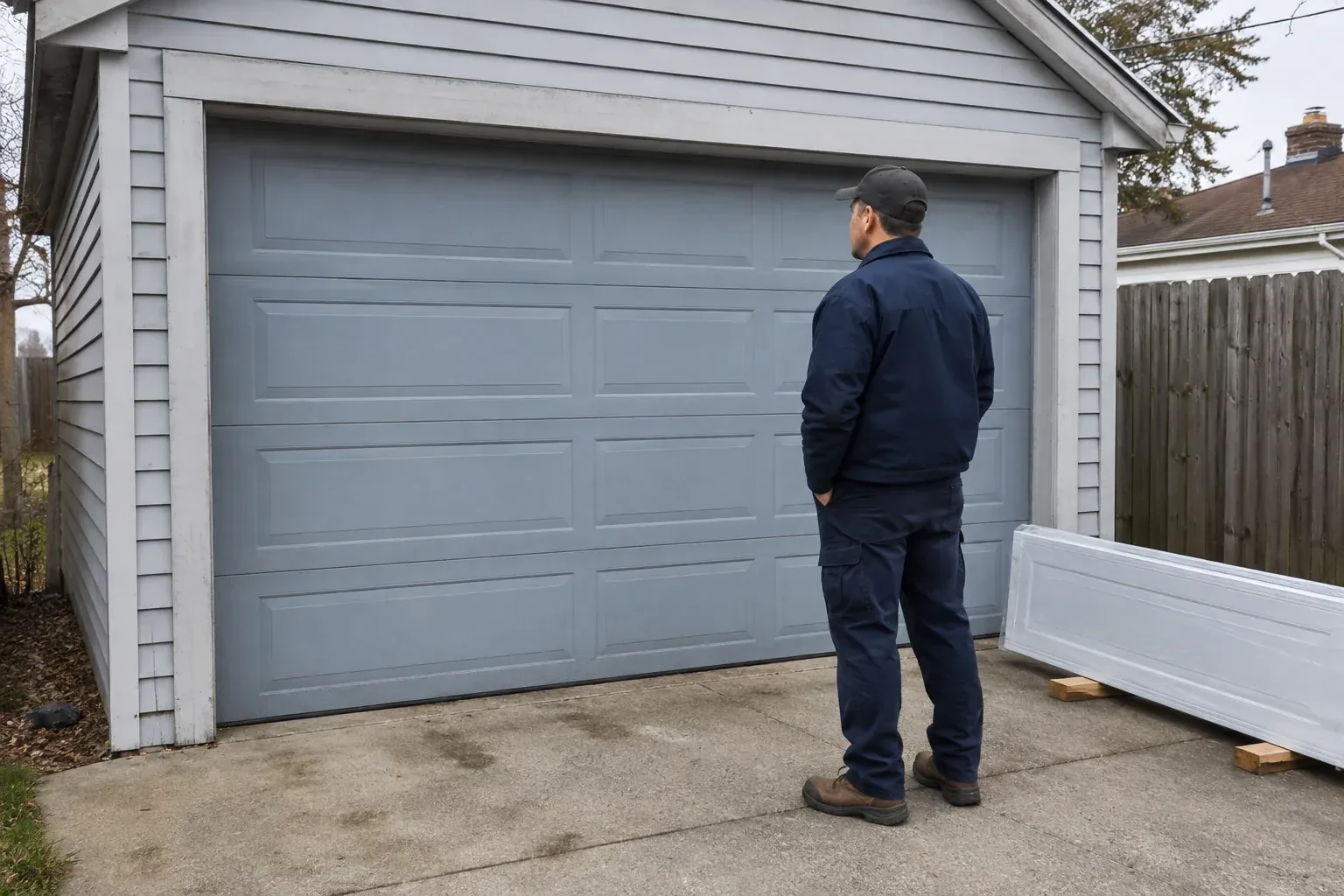
Sound familiar?Mississauga
- The call
- The door works well, although the open panels sit far beneath a sloped or raised ceiling. You are exploring whether the track, counterbalance and operator can be redesigned to follow the room more closely.
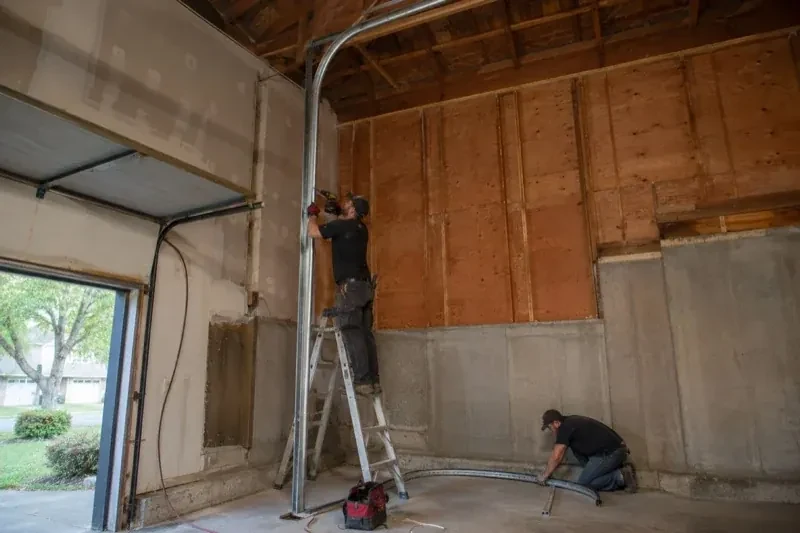
This conversion is a measured redesign of an existing sectional-door system. It begins by identifying the door, weighing or confirming its weight, inspecting the sections and locating sound support points. A layout is then developed for the extra vertical rise, shaft position and horizontal track. Components are selected for that geometry and installed as a matched set. Manual balance, cable tracking, roller movement and powered safety functions are checked before handover, leaving a documented arrangement that future service can understand.
Sound familiar?Mississauga
High-Lift Garage Door Conversion · Mississauga
Scene 1
Before components are ordered, the assessment should produce a proposed high-lift dimension and an expected lowest point beneath the open door. Those figures are considered alongside spring room, transition radius, shaft elevation, opener location and future service access. The record also identifies assumptions that need confirmation, such as hidden framing or a planned vehicle-lift height. This gives the customer a useful go-forward decision: a defined clearance outcome, a coordinated parts list and any preparatory work that belongs ahead of installation.
Scene 2
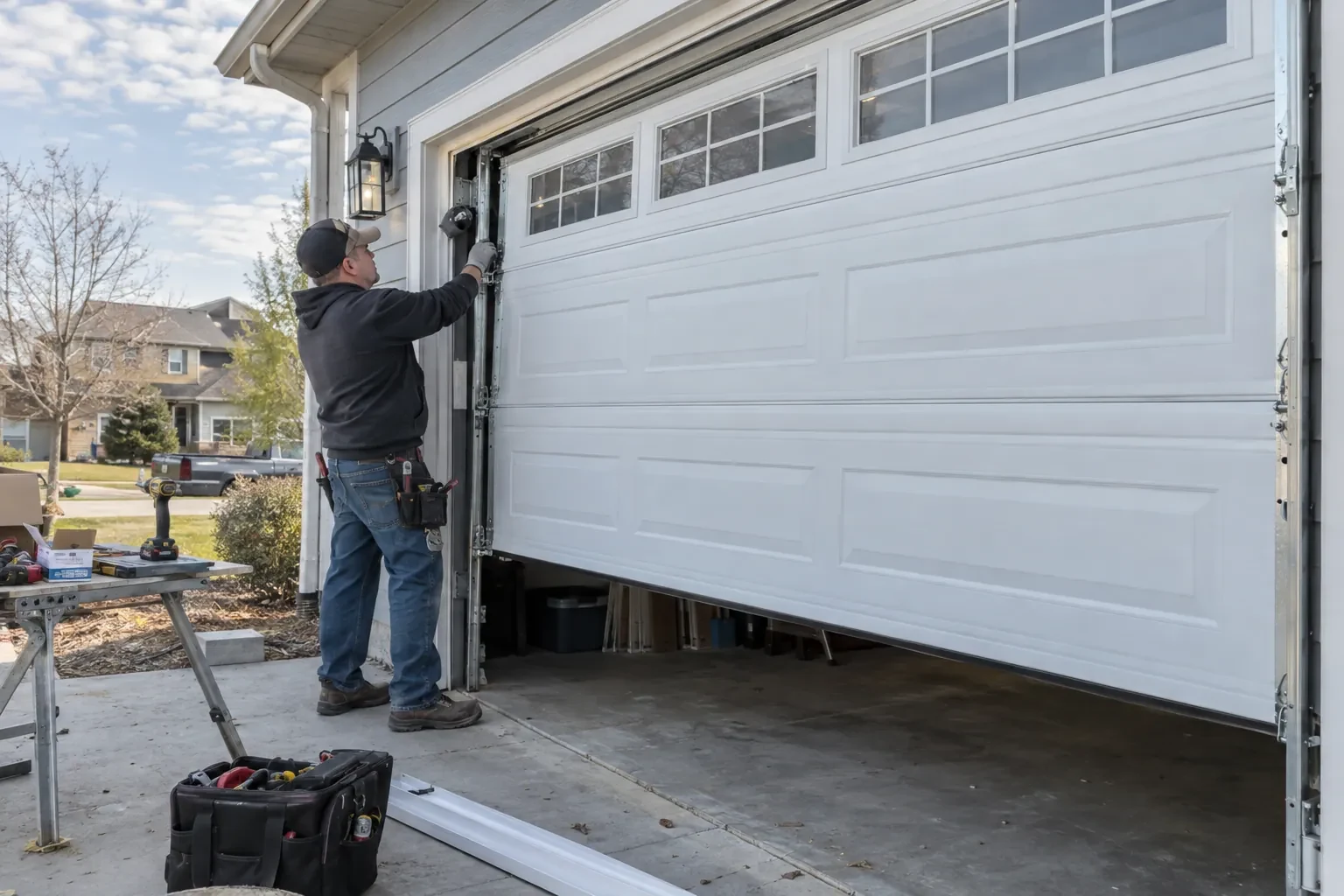
High-lift drums have a contoured cable surface that manages changing leverage as the door climbs. The selected drums are installed on the shaft with new lift cables of the specified length and construction. Each cable is routed from its bottom attachment, seated correctly in the drum grooves and set evenly with its partner. Technicians rotate the system under controlled conditions to observe how both sides wind. Proper drum and cable coordination keeps the door level and maintains useful tension throughout the vertical and curved portions of travel.
Scene 3
The handover gives you a reference for normal operation: level travel, consistent cable winding, rollers centred in track and a smooth transition from vertical to horizontal. Arrange a check if the door begins leaning, a cable looks slack or frayed, a roller approaches a track edge, or the operator repeatedly changes sound. Leaving the door in a stable position and keeping the area clear supports an orderly visit. Early observation helps a technician focus on the changed component while the documented conversion remains easy to trace.
What shapes the quoteApplewood Hills Garage Door Co.
FeesSame any hour
Some layouts can use track that rises or follows an appropriate roof contour, but the answer comes from site geometry and available system options. The door still needs a compatible transition, counterbalance design, stable supports and a clear path through its entire movement. Accurate roof-line and obstruction measurements allow the technician to evaluate a practical arrangement for the specific bay.
Sound sectional panels can often remain, subject to inspection. Their construction, reinforcement, hinges, rollers, top fixtures, weight and condition are reviewed for the new travel path. Reusing the door does not automatically mean reusing its track or counterbalance parts, since those components are selected for the changed geometry. The assessment identifies retained and replaced items separately.
A properly aligned system should travel smoothly, although its sound may differ because rollers follow a longer vertical route and the operator arrangement may change. Track spacing, roller condition, hinge movement, spring setup and secure supports all influence noise. Final cycling establishes a normal sound baseline, while care follows the lubrication guidance for the installed door components.
PeelOntario
High-Lift Garage Door Conversion · Applewood Hills, Markland Woods, Orchard Heights, Applewood Heights
Every square is one home in a hundred.
On-site assessment
The door works well, although the open panels sit far beneath a sloped or raised ceiling.
(289) 805-3301, open 24/7.
On-site assessment preferred · (289) 805-3301, open 24/7