Skip to content
ApplewoodHills Garage Door Co.Open 24/7 (289) 805-3301
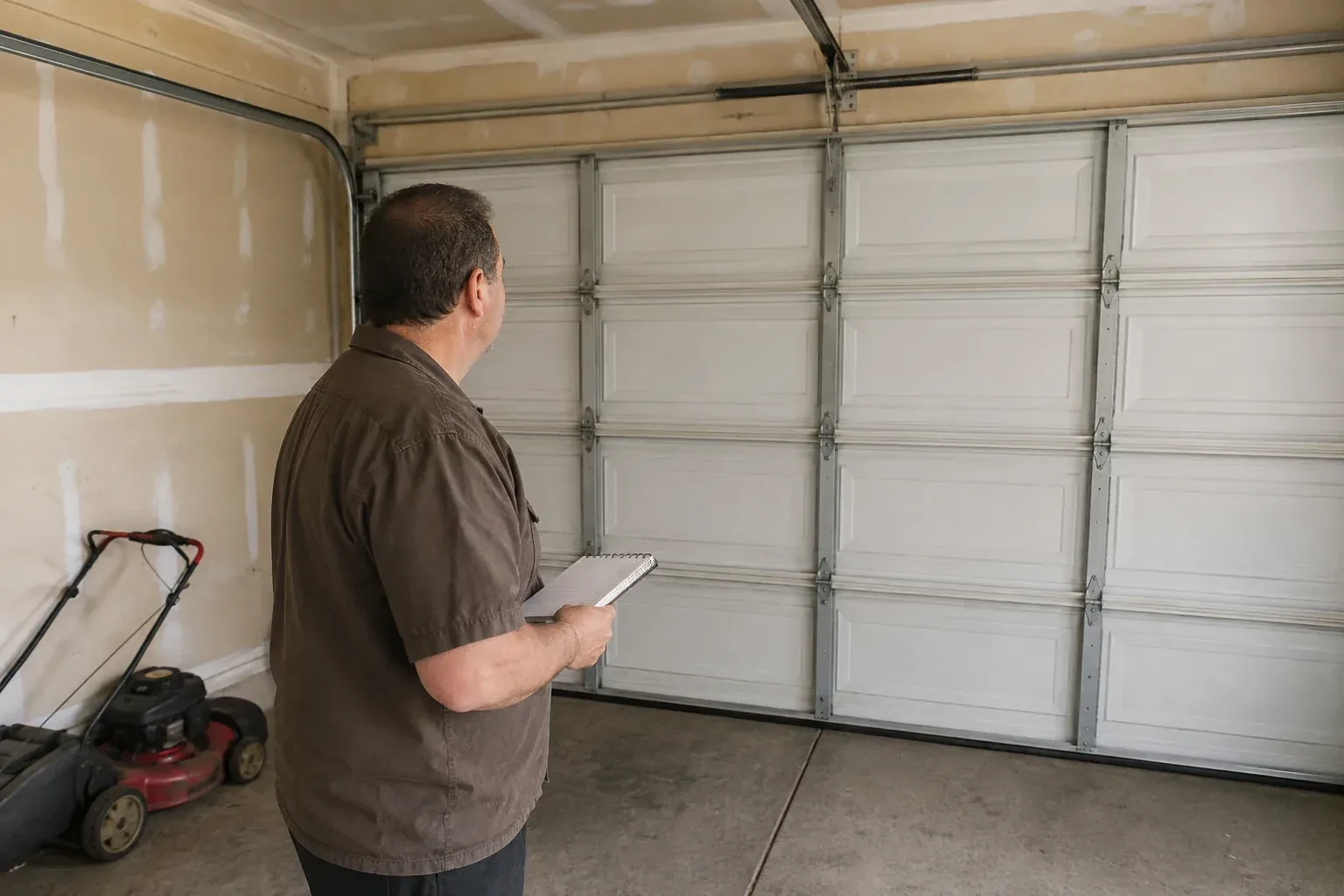
Technician holding a notebook while looking at a closed sectional door. — Garage Door Balance Adjustment, Markland Woods

Springs · Markland Woods

Garage Door Balance Adjustment

On cold mornings the door barely makes it up. The motor whines, the door crawls, and once or twice it has given up halfway.

In plain words

An opener is designed to move a door that is already balanced, and every safety feature in it assumes that. The force it applies is limited so the door will stop and reverse when it meets something, and that limit only makes sense when the door is close to weightless. When springs lose tension, the opener has to lift real weight, its motor and gears work harder, and it may reverse or stall for no obvious reason. A balance adjustment puts the weight back on the springs where it belongs, so the opener can return to the light duty it was built for and its reversing behaviour is dependable again.

Sound familiar?Markland Woods

The call
The opener has started to groan on the way up. The door climbs slowly, hesitates near the top, and on the way down it sometimes stops a hand's width above the floor and reverses, as if something were in the way when nothing is.
NextHow the visit goes

Garage Door Balance Adjustment · Markland Woods

How the visit goes

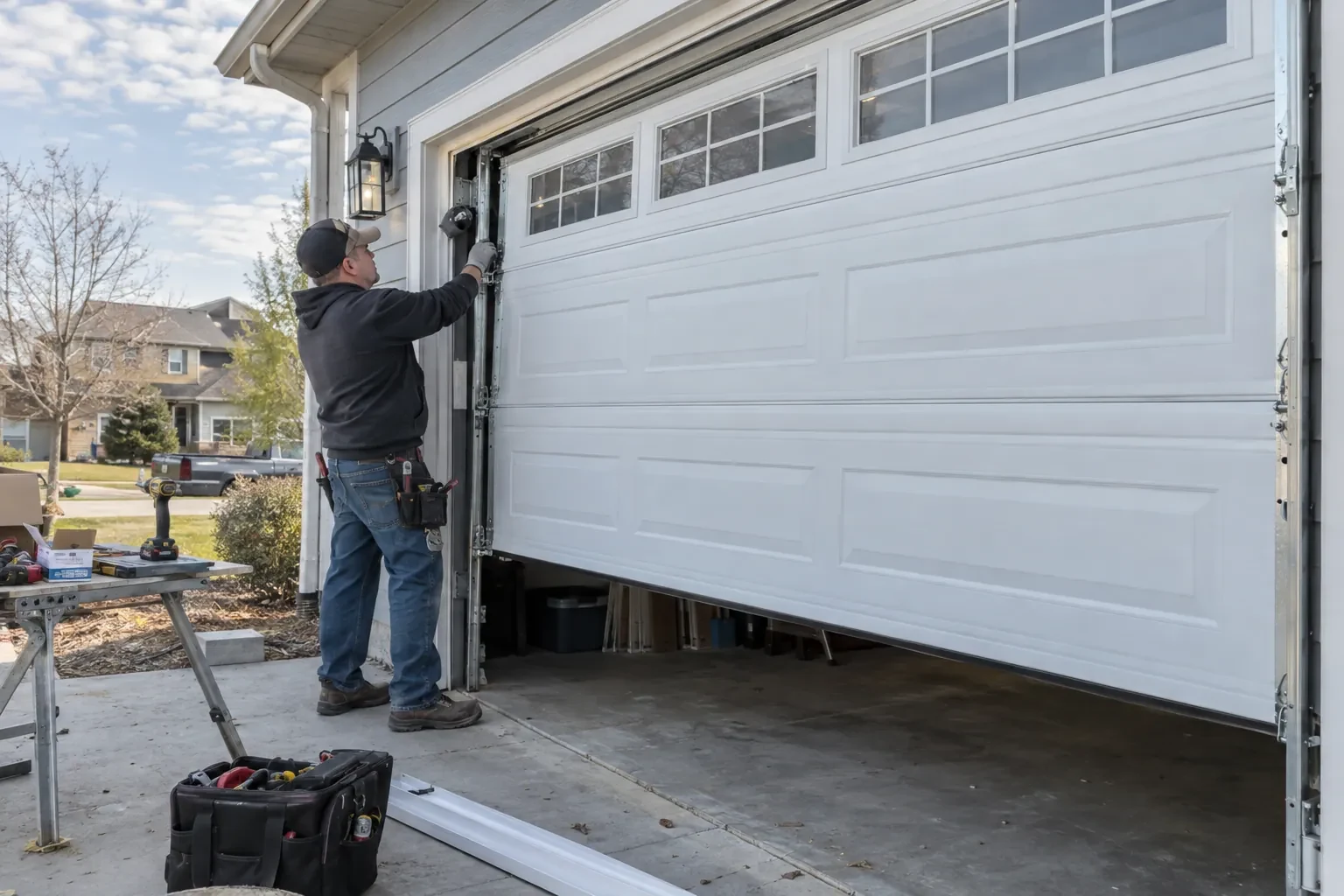
Technician reaching to the side track of a partly raised white garage door with small windows, a tool bag on the driveway. — Markland Woods
  1. Scene 1

    Extension springs and their containment

    On a door with springs along the tracks, the check has a shape of its own. Both springs are compared for length and coil condition with the door closed, since a spring that has stretched further than its partner leaves one side of the door lighter. The pulleys are spun for wear, the cable clips on the track hangers are checked for equal position left and right, and the technician confirms a containment cable runs through the centre of each spring and is anchored at both ends. The bottom brackets and the S-hooks that set the spring tension are inspected for rust and deformation before any adjustment is planned.

  2. Scene 2

    Removing the friction that made the door feel heavy

    Where the inspection found drag, it is dealt with before the springs are judged. Seized or worn rollers are swapped for new ones, one hinge at a time so the door never leaves its track. Track sections knocked out of line are eased back plumb and their brackets tightened to the jamb; a dent is dressed out or the section replaced. Hinges with play are replaced and their screws driven into sound material. The springs, hinge pins, roller stems and bearings then receive a light coat of garage-door lubricant. After this the door is lifted again, and it is common for the heaviness to be largely gone before any turns are added.

  3. Scene 3

    A door that is nearly weightless again

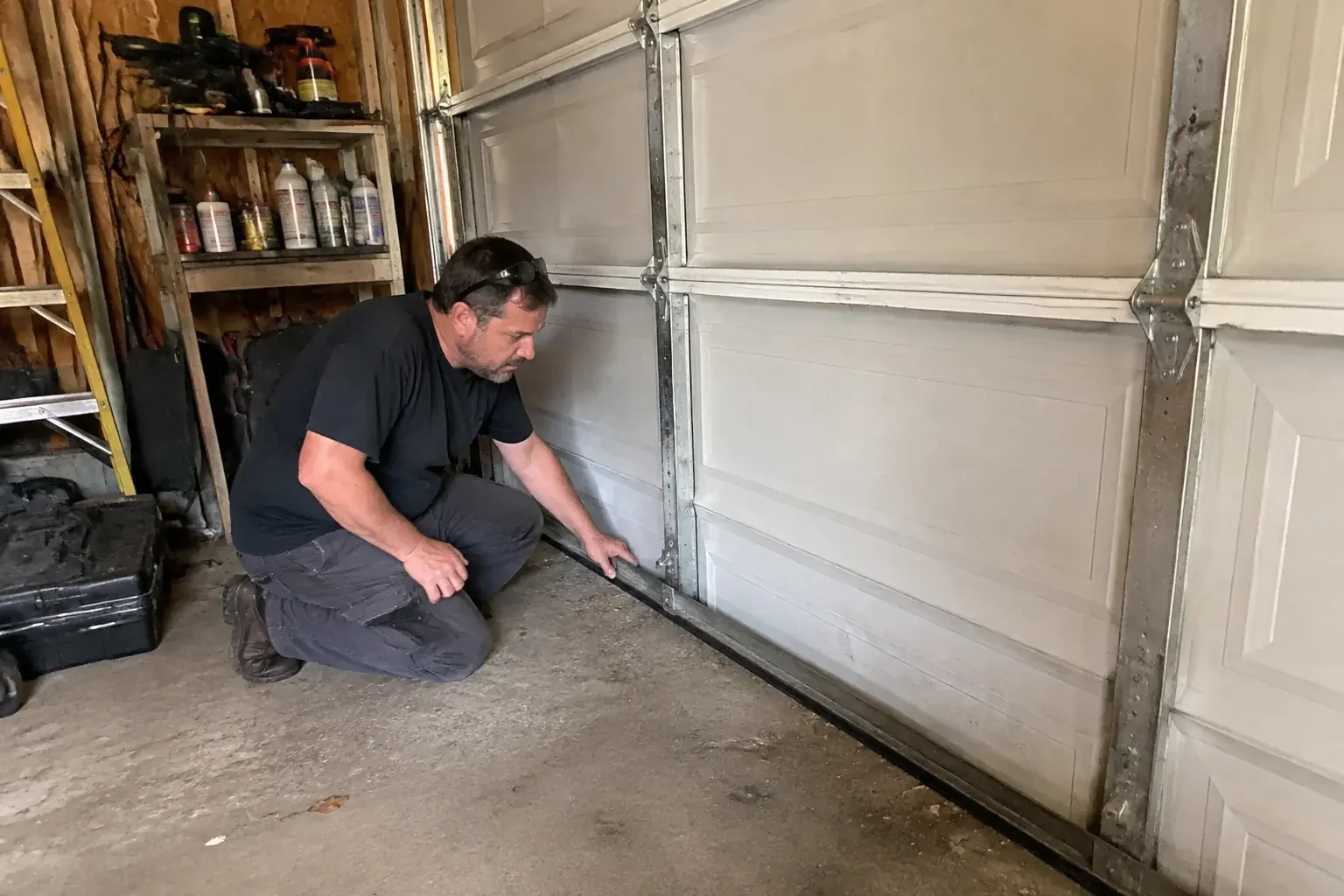
    The difference is obvious the first time you lift the door by hand. It rises with light effort, pauses when you stop it, and stays fully open without drifting down. Closing it, the bottom seal meets the slab evenly along its length instead of thudding at one corner. Under power, the opener runs quieter because it is guiding a balanced door rather than hauling one, and it stops reversing near the floor for no reason. The door also moves at the speed of your hand, neither racing ahead nor dragging, which is exactly what the industry checklist describes as correct operation.

In the van

  • Containment cables
  • Extension springs and S-hooks
  • Door scale
  • Winding bars
  • Garage-door lubricant

What shapes the quoteApplewood Hills Garage Door Co.

Whether a second person is needed to support the door
A heavier double door or one already sitting unevenly is sometimes safer to adjust with a second person steadying it while the springs are reset. That extra pair of hands is called in once the technician sees how the door is behaving on site.
Corroded or seized fasteners
Set screws and cone screws that have rusted solid take time to free, and badly corroded hardware is replaced rather than reused, which shows in the parts list.
Opener adjustment and tests
Resetting travel limits and force settings on the opener and running the reversal tests is a short step that follows every balance job and is named in the quote when needed.

FeesSame any hour

Have it ready

Before you call · 0 / 3

(289) 805-3301

What people ask us

Why does my door drift upward when I let go of it?

Too much spring tension. The springs are pulling harder than the door weighs, so at rest they win and the door climbs. This often follows a spring replacement wound a turn too far, or a door that lost weight when heavy panels were swapped for lighter ones. Releasing a quarter turn or two, tested after each, brings it back to holding still.

What safety tests are done after the adjustment?

Two are standard. A piece of two-by-four is laid flat on the floor in the door's path and the door closed onto it; it must reverse and return to open. Then, as the door closes, an object is passed through the photo-eye beam near the floor, and again the door must reverse. Both depend on a balanced door, which is why they come after the adjustment rather than before.

The door was fine until a power cut. Why is it heavy now?

During a power cut the door is often released and moved by hand for the first time in years, and what people discover is a door that had already grown heavy while the opener quietly covered for it. The outage did not change the springs; it revealed them. A balance check confirms what the door weighs against what the springs give, and resets them to match.

Markland Woodsinformation

PeelOntario

Garage Door Balance Adjustment · Mississauga, Applewood Hills, Orchard Heights, Applewood Heights

Town
Markland Woods, Peel
In business
24 years
Hours
Open 24/7
Nights, weekends and holidays, same fees
Visits
On-site assessment preferred. Request a visit or call.

2021 census: what it means at the door

Every square is one home in a hundred.

  • 38 in 100 homes · mixed ages
  • About 38% of homes in Mississauga were built in 1980 or earlier, according to the 2021 Census.In a mixed neighbourhood, some garages are detached with plenty of side room and others are tucked under a bedroom with little headroom, so opener and spring choices vary from house to house. Measuring at the door, rather than assuming, is how the right hardware is chosen.
  • Single-detached houses make up about 37% of homes in Mississauga (2021 Census).Condo and townhouse garages are frequently used for storage as much as parking, with the door opened many times a day, and the shared walls mean vibration travels. A well-balanced door, tight hardware and a quiet opener are the upgrades residents notice most.

Source: Statistics Canada, Census Profile

Open Markland Woods in Google Maps

On-site assessment

Request a visit.

On cold mornings the door barely makes it up.

(289) 805-3301, open 24/7.