Skip to content
ApplewoodHills Garage Door Co.Open 24/7 (289) 805-3301
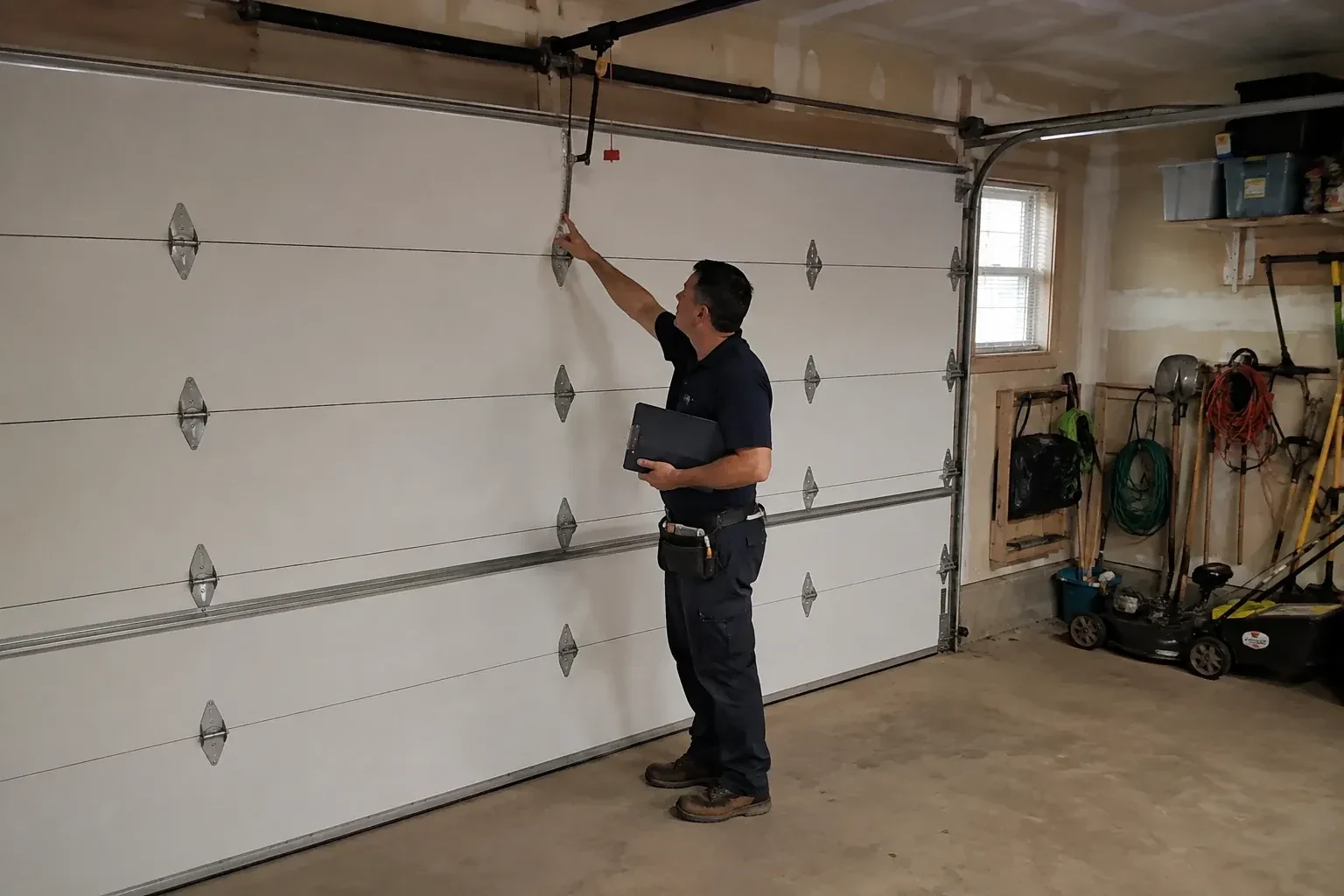
A person holding a clipboard examines the interior hardware of a closed garage door. — Garage Door Tune-Up, Applewood Heights

Repairs · Applewood Heights

Garage Door Tune-Up

Every morning the door announces itself to the whole street: a long metallic squeal as it climbs, a rattle at the top, and a groan on the way back down. It still opens and closes, but it never used to sound like this.

In plain words

What you receive from a tune-up is a door that runs better and a written picture of its condition. The technician records what was tightened, lubricated and adjusted, how the balance and reversal tests came out, and which parts are still healthy, which are worth watching and which have reached the point of a separate repair quote. That record turns the next visit into a comparison instead of a fresh start, and it lets you describe a new sound precisely when it appears. Maintenance and repair stay two different decisions, and you make the second one with the facts in front of you.

Sound familiar?Applewood Heights

The call
On windy nights the door rattles in its frame, there is a line of daylight along one side, and the bottom seal has gone hard and flat. Leaves and fine snow drift in underneath and the garage never seems to hold its temperature.
NextHow the visit goes

Garage Door Tune-Up · Applewood Heights

How the visit goes

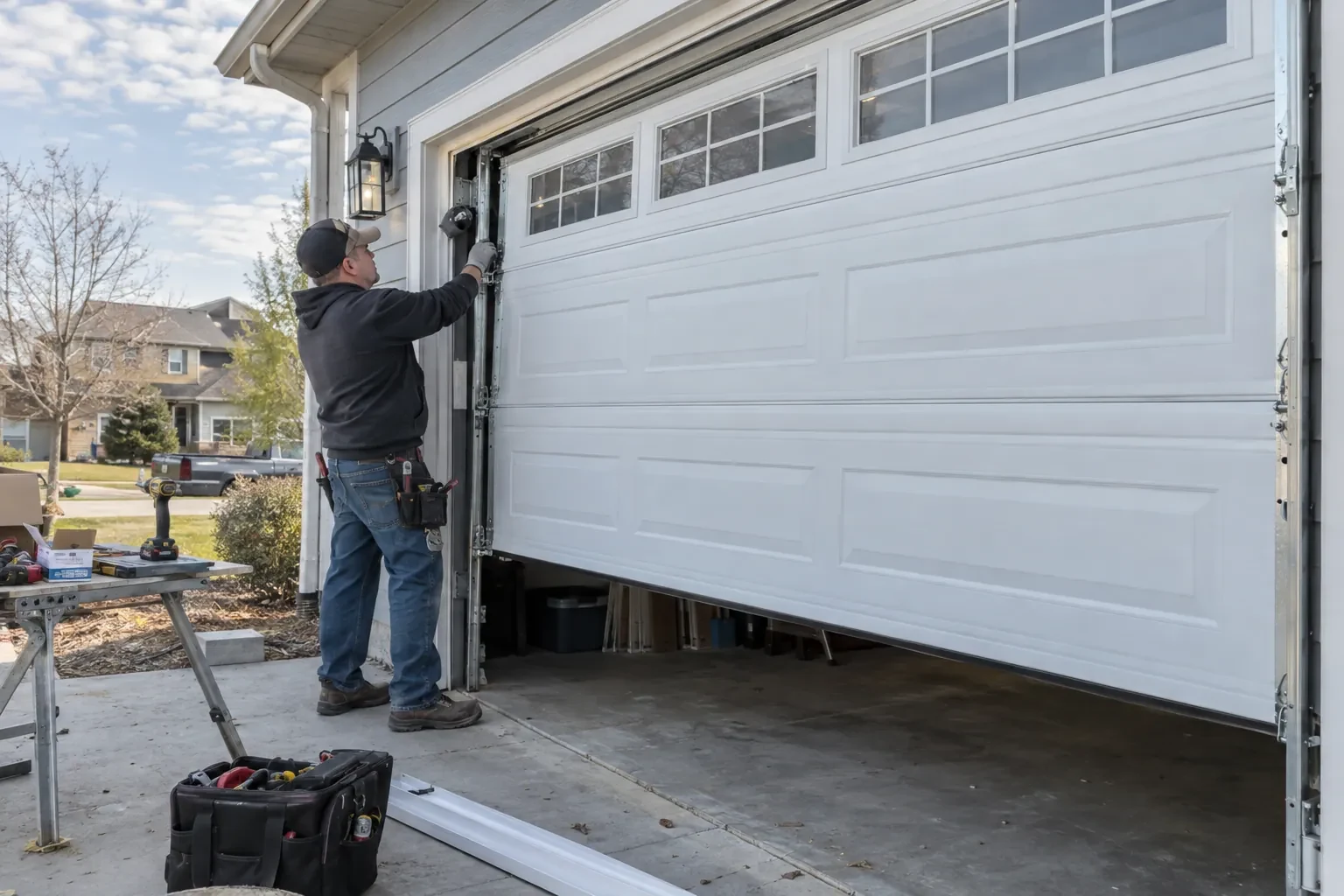
Technician reaching to the side track of a partly raised white garage door with small windows, a tool bag on the driveway. — Applewood Heights
  1. Scene 1

    Sorting the sounds by where they live

    Noise is the most common reason a tune-up is booked, and every sound has an address. A high squeak that repeats with each section movement points to dry hinge pins. A rumbling that follows the door up and down usually comes from roller bearings. A sharp rattle at the top of travel is often a loose track bracket or hinge screw. A rhythmic slap along the ceiling is a slack chain on the opener rail. A pop or crack as the door starts is worth a closer look at the springs and drums. The technician places each sound, then checks that spot directly rather than lubricating everything and hoping.

  2. Scene 2

    Tightening what the door shook loose

    A garage door moves hundreds of kilograms of steel through a curve twice a day, and the vibration works on every screw. The technician goes back along the list made during inspection and tightens hinge screws, track bolts, bracket lags and the fasteners at the opener header and rail. Stripped screws are replaced with the next size, and missing ones are filled. Track brackets are snugged with the roller-to-track gap preserved so nothing binds. The bottom brackets and anything anchored to the springs are deliberately left alone, since they hold the door's weight under tension; if one of those is loose it becomes a separate job with the tension safely released first.

  3. Scene 3

    Knowing what to listen for next

    Part of the handover is a short lesson in the door's language, so the next change registers. A squeak returning means the hinge pins want lubricant. A new rattle at the top of travel means a screw is loosening and is worth a look. A door that starts to sink when lifted by hand is springs losing tension. A loud bang from the garage with the door then feeling very heavy is a broken spring, and the door stays closed until it is replaced. A door that reverses on its own with no obstruction is a sensor or force issue. With these signs in mind you can describe a problem precisely and decide whether it needs a call.

In the van

  • Lag screws for brackets and header
  • 2x4 test block and tape measure
  • Bottom seal (astragal)
  • Photo-eye brackets and wire
  • Locking pliers or C-clamps

What shapes the quoteApplewood Hills Garage Door Co.

Photo-eye and wiring work
Cleaning and realigning sensors is routine. A bent bracket, a chafed wire or a sensor that has failed means a part or a rewire, which is named separately.
Torsion or extension springs
Torsion springs above the header and extension springs beside the tracks are inspected differently, and extension systems have pulleys and safety cables that add items to the checklist.
Door construction and weight
A heavy wood or insulated steel door works its hardware harder than a light aluminum one, and the balance check and fastener work take a little longer on the heavier door.

FeesSame any hour

Have it ready

Before you call · 0 / 3

(289) 805-3301

What people ask us

Do you adjust the springs during a tune-up?

Springs are inspected and lubricated during a tune-up, and the balance test tells us whether they are carrying the door's weight properly. Changing their tension is a separate, deliberate job: the door is clamped to the track, winding bars are used on a torsion spring, and the technician works from a stable position. If the balance check shows the springs need adjustment or replacement, you receive that as its own recommendation with its own quote.

How do I test the safety reversal at home?

Two tests, once a month. With the door open, press close and wave a broom handle through the photo-eye beam near the floor: the door should stop and go back up. Next, set a 2x4 flat on the concrete in the middle of the opening and press close: the door must reverse when it meets the board. If it stops on the board without reversing, the down travel or force setting needs adjustment, and if it fails after that, book a visit.

My door closes, then reopens on its own. Is that a tune-up job?

Often, yes. A door that reverses before reaching the floor usually reacts to one of three things: photo-eyes misaligned or dirty, a down travel limit set so the door meets the floor before the opener expects it, or a force setting so low that stiff hinges, debris or a roller out of true read as an obstruction, since a clean, dry track is what the door is meant to run on. A tune-up clears all three by aligning the sensors, resetting the limits and freeing up the door's movement.

Applewood Heightsinformation

PeelOntario

Town
Applewood Heights, Peel
In business
24 years
Hours
Open 24/7
Nights, weekends and holidays, same fees
Visits
On-site assessment preferred. Request a visit or call.

2021 census: what it means at the door

Every square is one home in a hundred.

  • 38 in 100 homes · mixed ages
  • About 38% of homes in Mississauga were built in 1980 or earlier, according to the 2021 Census.Where homes of different ages sit together, the common thread is that every door eventually needs springs, rollers, seals and a balance check. What differs is the spring type and the size, so the technician measures and matches rather than fitting a standard part.
  • Single-detached houses make up about 37% of homes in Mississauga (2021 Census).Townhouse rows generally have a narrow single door on each unit, with shared walls on both sides. Noise from a chain opener or dry rollers carries straight into the neighbour's home, so quiet belt-drive openers and nylon rollers are a popular and considerate choice here.

Source: Statistics Canada, Census Profile

Open Applewood Heights in Google Maps

On-site assessment

Request a visit.

Every morning the door announces itself to the whole street: a long metallic squeal as it climbs, a rattle at the top, and a groan on the way back down.

(289) 805-3301, open 24/7.