Applewood Hills Garage Door Co.Bulletin 3 of 3Mississauga, Ontario
Garage Door Track Repair or Replacement: what the visit covers
Track has to be in the right place, not merely straight.
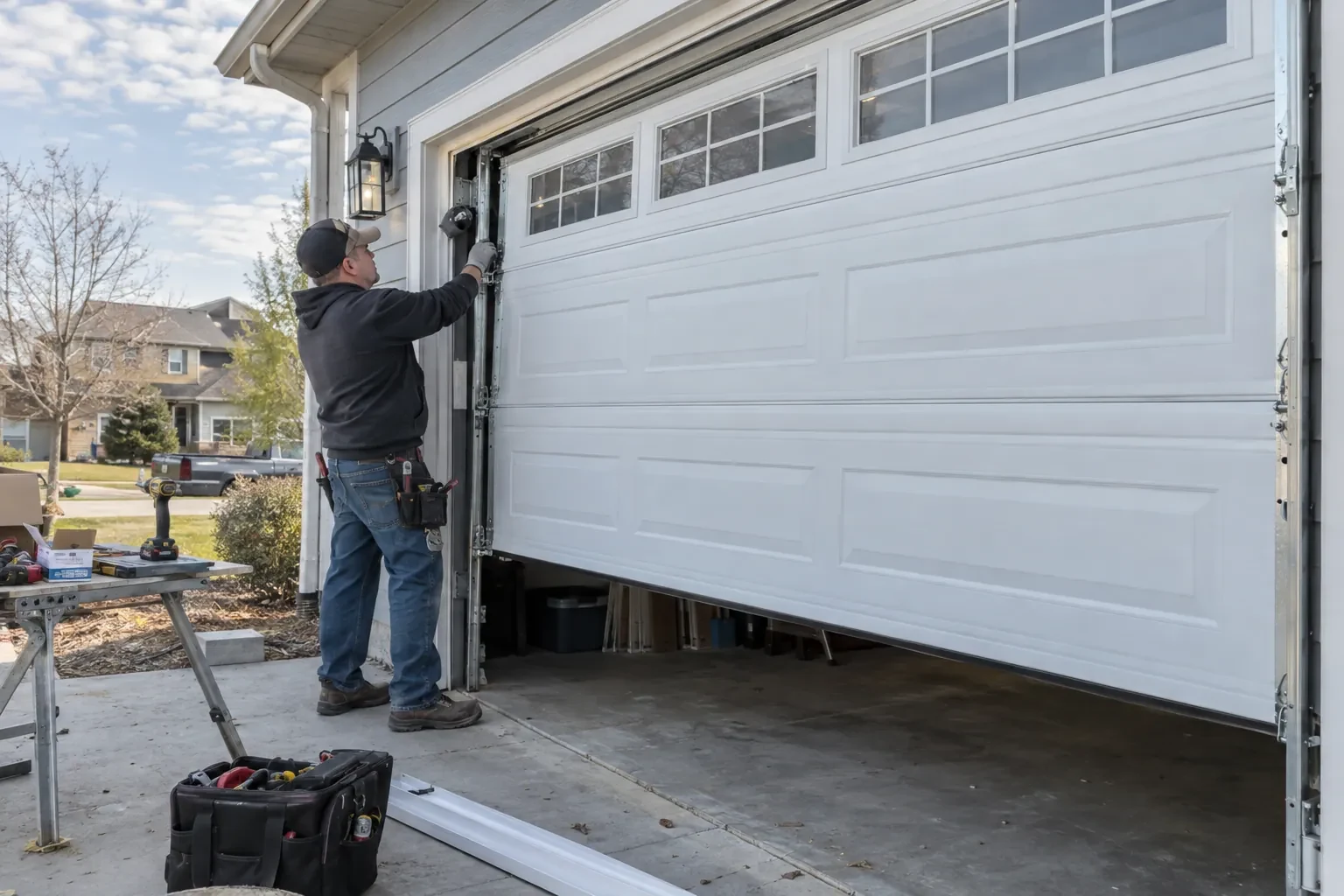
Track has to be in the right place, not merely straight. Each vertical run is set plumb with a slight taper away from the jamb at the top, so the door presses against its stop when closed and swings clear as it opens. The gap between track and door edge is equal on both sides. The horizontal runs are level with each other, square to the vertical runs and matched in radius so the door turns the curve without twisting. Track repair measures all of this and resets whatever has drifted, because a door is only as smooth as the path it is given.
What bent it
The last question is why the track moved, because the answer shapes the repair. A crease at bumper height with paint transfer is impact. A track that has crept off the jamb with screws backed out is vibration and time. Rust at the floor is winter. A twisted section on one side with a slack cable beside it usually follows a cable or spring failure that tipped the door. Overhead damage tends to trace back to storage, a ladder or a hanger that gave way. You will be asked what happened before the symptom, since a shovel in the opening or a nudge from the car is a fact only you can supply.
Renewing the curve or the horizontal run
Overhead work starts with the springs unloaded, since the flag bracket carrying the end bearing plate has to come loose for the curve to change. The technician fits a curve of the same radius so the door meets the horizontal run at the same height, then hangs a new or straightened horizontal track from back hangs screwed into joists, not drywall, with a stiffening angle along its length. The rear of each run is set level with its partner, or to the same pitch, and square to the vertical track, and the two hangers are adjusted until a straightedge across the pair reads true. A bent hanger is replaced rather than bent back.
A monthly look at the brackets and hangers
Track problems announce themselves early to anyone who looks. Once a month, with the door closed and the light on, run your eye down each vertical track: the brackets should sit flat against the wood with no gap behind them and no screw heads standing proud. Then look up at the horizontal runs and the angle hangers holding them; a hanger that has begun to lean or a run that no longer looks level with its partner is worth a call while it is a small adjustment. Finish by watching the door open once, checking that every roller stays in its channel through the curve, which is the same check the industry checklist asks for.